
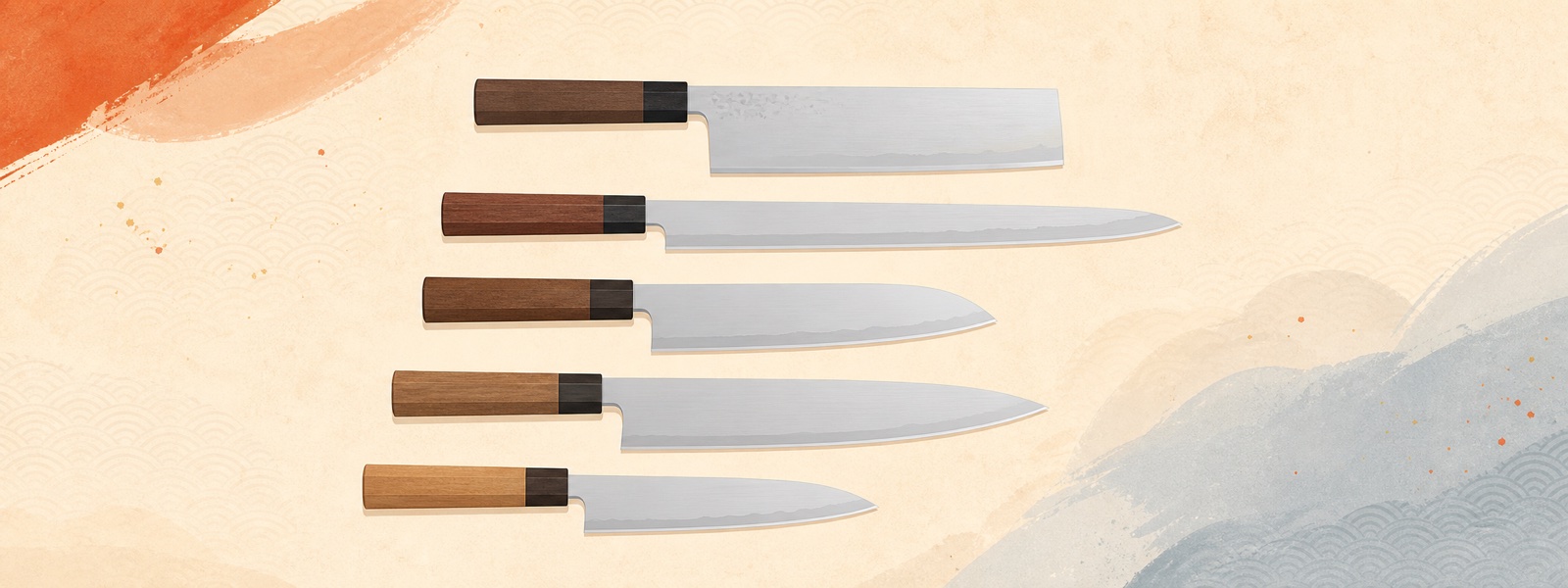
The useful question is not which knife is “better.” It is which one makes your ordinary dinner easier to prepare.
A gyuto and a santoku are both general-purpose Japanese kitchen-knife shapes. Sizes, grind and handle vary by maker, so shape is the beginning of the conversation, not the whole specification.
Begin with the meal, not the display case.
Put a gyuto on your shortlist if you want a longer, pointed all-round shape for varied prep and you have room to use it comfortably. Put a santoku on your shortlist if a shorter, flatter profile and a compact workspace sound more like your daily routine. Neither line is a purchase instruction.
Gyuto
Consider it when a longer pointed profile and varied prep suit your cooking routine.
Santoku
Consider it when a compact, flatter all-round shape feels closer to the way you work.
Try this three-part comparison.
- What do you cut most? Write down a normal weekday meal. Think about vegetables, boneless proteins and how often you want one knife to cover the whole preparation.
- How much board space do you use? Measure the part of the board you actually use. Leave room for your hands and ingredients.
- What movement feels natural? Ask to hold both shapes. Notice your knuckles, the part of the edge you favour and whether the handle is comfortable.
Bring these questions to the counter.
- Which size of this shape fits the meals I described?
- May I compare the grip and balance of these two examples?
- What care does this steel need after normal home cooking?
BladeHunter is being prepared to keep shape and steel comparisons alongside your shopping research. It does not make a purchasing decision for you or replace handling the specific knife.
Explore the buying guide — release in preparation